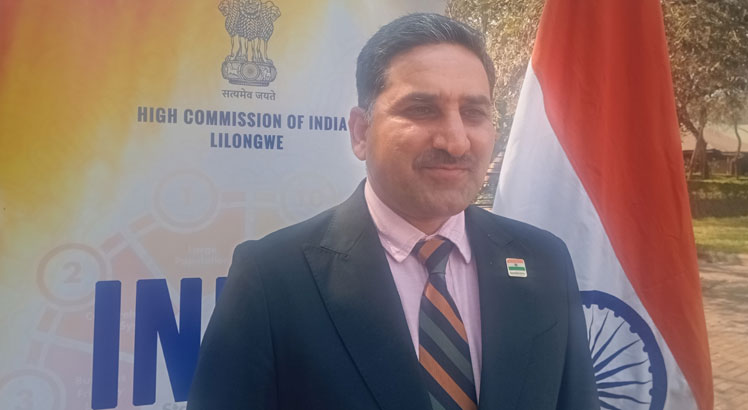
Indian High Commissioner Amararam Gurjar has rated the forthcoming 12th India Pharmaceutical Exhibition (Iphex) 2026 as the largest expo of Indian pharmaceutical products and its technologies, critical for emerging markets for both learning and linkages.
To be held from September 7 to 9 2026, the annual exhibition, which attracts participants from around the world, will be held at Bharat Mandapam in Delhi, India.
Speaking during an engagement with the country’s pharmaceutical industry players on Tuesday in Lilongwe ahead of the expo, Gurjar said that they are delighted that more than half a dozen people from Malawi will participate in the expo.
the collaboration. | George Lumwira
“The expo will further enhance the collaboration between India and Malawi, especially in a healthcare and pharmaceutical sector,” he said.
Gurjar said the engagement was critical considering that in 2024, the governments of Malawi and India signed a memorandum of understanding on pharmacopoeial cooperation to align regulatory standards and promote the use of the Indian pharmacopoeia.
Central Medical Stores Trust (CMST) chief executive officer Moses Chisale, whose officials are expected to attend the expo, said they are determined to cut their 80 percent pharmaceutical imports through intensified business partnerships with Indian pharmaceutical companies.
He said the strong relationship with the Indian High Commission has enabled the local pharmaceutical industry to stabilise the supply chain of essential medicines from their Indian partners, but they are looking at further strengthening the partnership.
Chisale said some local manufacturers should learn from those who have experience and exposing them to such exhibition can strengthen their readiness to upscale production.
Pharmacy and Medicines Regulatory Authority acting head of medicine registration and licensing Clifford Mwale said the authority is already working with Indian pharmaceutical firms to licence those eligible to supply medicines on the local market.
“Through this collaboration, Indian pharmacopoeia will provide a greater opportunity to enable Indian manufacturers to establish manufacturing facilities for the pharmaceutical drugs in Malawi,” he said.
In February this year, Malawi University of Science and Technology announced plans to start manufacturing antiretroviral drugs and other medicines locally to reduce dependence on imported medicines.
Malawi imports 80 percent of its medicines while locally producing only 20 percent, according to CMST.
Malawi spends about $169 million (about K295 billion) annually to import pharmaceutical products, making it one of the country’s most vital import categories alongside petroleum products and fertiliser.